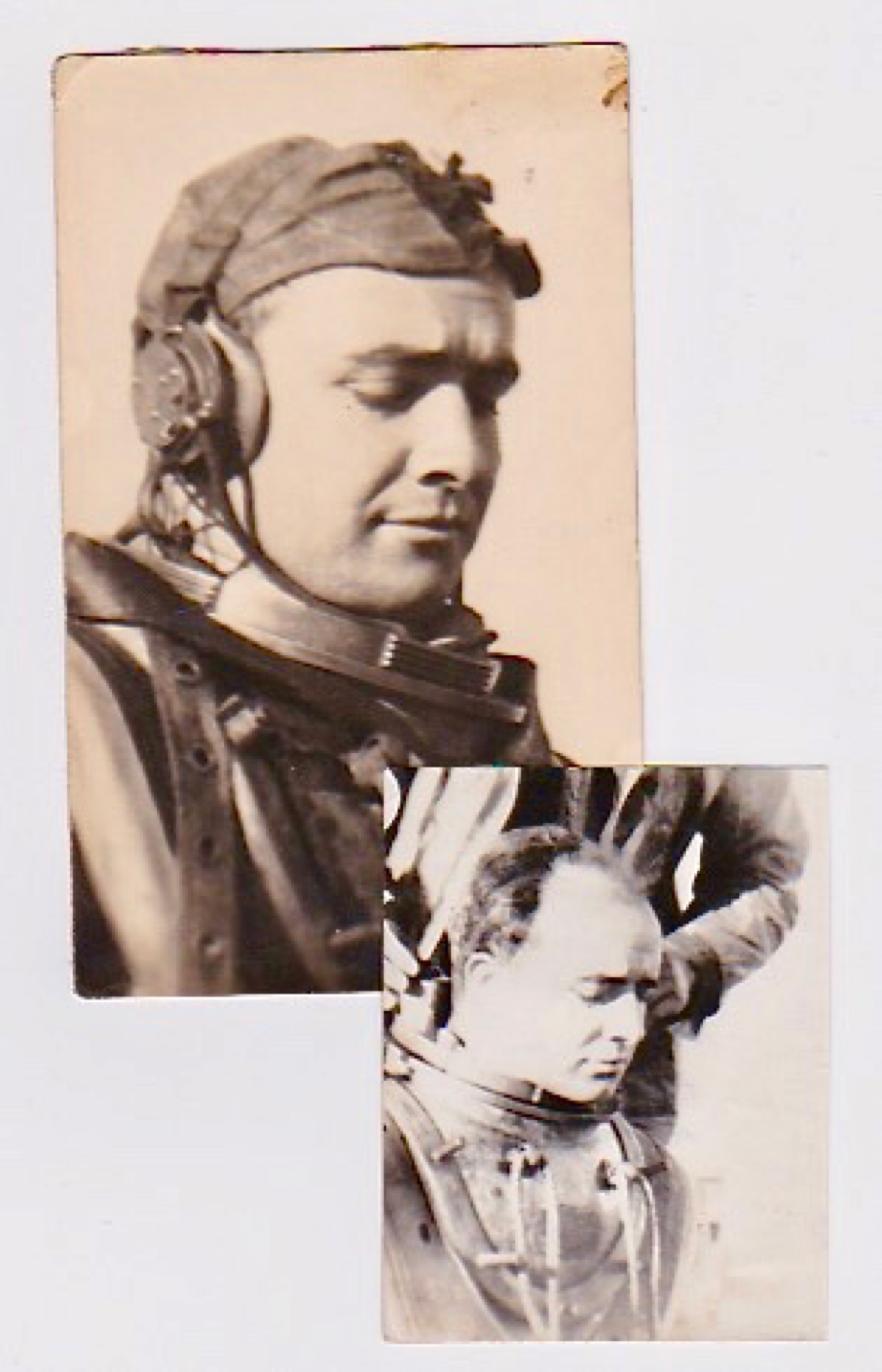
 Roy Sturgill preparing for a dive in Australia…1942 or 1943…
Written by Star Holmberg December 4, 2006
In the last hours of my father’s life he lay silent and still, staring upward with eyes that had seen a myriad of things, but which seemed to see nothing on that particular day. The vibrant energy that had once coursed through his veins was a memory I could see clearly only in my mind’s eye, and in my journal entries for that day in May 2003.
While Dad hung on to life by a thread, I reminisced in writing about a fishing boat excursion through the co-mingling waters of Goodman Creek and Lookout Point Reservoir. As was typical in all my fishing outings with Dad, I was just along for the ride and the nature of it all. He was casting worms out in hopes of a catch, while I was counting waterdogs that wriggled through the still waters alongside the boat. I couldn’t tell you if Dad caught a fish that day, but I know I gently captured and released several salmon-bellied salamanders.
Other recollections flowed onto the pages of my journal – his specialty marinated venison steak, the wooden father Buddha with little Buddha children that he’d brought back from overseas, attractive objects he fabricated from found copper and brass, the mantle he hand hewed from a fallen tree, the two occasions in my childhood when he was a real Santa Claus.
At some point in my stream of thoughts he took his last breath. He was so quiet, and the oxygen pump so distracting, I missed the moment. Also, I was caught up in the imagery of the man he had been so long before the Alzheimer’s phase of his life. He was strong and agile, a man of incredible stamina. And he was courageous.
While I had always thought of my dad as exhibiting such traits, it was not until February 1991, when I was age 38, that I learned the depth of heroism my father was capable of. I knew that he was a Pearl Harbor Survivor, and that he served on the U.S.S. Nevada on December 7th, 1941. But I had never heard the details of his story until, armed with a tape recorder and in anticipation of the upcoming 50th Anniversary event in Honolulu, I sat down to interview him at the dining room table. I’m so grateful to have heard it from his own mouth, when he could still tell it at the age of 71. My 70-year old mother, Audrey Sturgill (a Navy wife, as she referred to herself), was present for this interview with Roy. Thus, her participation in select parts of the discussion occurred naturally, and contributed greatly to this true story. Since the interview I have also come to better understand the attack at Pearl Harbor from reading personal accounts and ship logs, plus through details from other family members with whom my father confided.
As I posthumously pen my father’s saga to paper, now 65 years after the horrendous day, I am particularly challenged to give it a tone reflecting my father’s way of telling a story. Had I been privy to his sharing ‘round the campfire on a deer hunting trip, the length and detail of the quotes would likely be greater, the embellishments more pronounced. While doing a taped interview afforded me the luxury of replaying what he said, and thus nailing the accuracy, it was likely not the best way to capture Roy Sturgill at ease. But I offer it nonetheless.
As Audrey sloshed her second son’s diapers in cold rinse water, news came over the radio airwaves and into her parents’ living room, “The island of Oahu has been attacked by the Japanese.” Stunned, she left her daily chore to listen more closely to the shocking news. Unfortunately, though mention was made of certain ships, the fate of her husband Roy’s ship, the U.S.S. Nevada, was not mentioned. Her first thought was that her new baby, almost two months old, would never get to meet his daddy.
It was not until Christmas Eve, 17 days later, that she received notice in the mail that Roy was alive. No mention of his condition or whereabouts was indicated. Soon after that she began to get letters from him; but, the mail was “heavily censored, “ so information was scanty. Roy gave the impression in his writing that he was still with his ship. But when Audrey finally came upon a sailor in January 1942 and inquired about the Nevada, the “white hat” told her that it had been hit and sunk. She was utterly confused until months later when Roy was able to tell her the whole truth about his own personal ordeal.
First Class Machinist Mate Roy Sturgill was unaware of Japanese planes approaching Oahu as he left the U.S.S. Nevada and boarded a 35 foot motor launch shortly before 8 o’clock on that fateful Sunday morning. Included in the dozen going ashore were 6 junior officers with plans to play tennis or golf, or perhaps spend time with their families. Roy and at least two other enlisted men were headed for shore patrol, with the balance off to presumably have a good time. Along the way a delivery, perhaps some outgoing mail, was to be made at the Navy Yard.
Proceeding southwest down Battleship Row, they were close by the West Virginia when planes began to fly overhead. Roy’s first thought, without being able to identify them as they approached under cloud cover, was that U.S. planes were about to have “smoke bomb practice on Ford Island,” as had been done on some recent Sunday mornings.
Within moments it became apparent that this was not the case, that these were Japanese attack planes and dive-bombers, and the men were suddenly hitting the bottom of the unarmed boat as torpedoes began slicing across the bow and slamming into the ships nearby. Before their eyes, from what Roy called a “spectator’s seat out in the middle of the harbor,” the West Virginia took “no less than five blows to one side of the ship” and began to sink.
The liberty launch continued on its course for a few more minutes, then circled back and headed for refuge in the area east of Battleship Row near the Submarine Base. As they came up to the landing, a torpedo ran ashore with them, but did not explode because it failed to hit anything on the detonating point. In the words of Roy fifty years later, “If it had, I wouldn’t be here today.” The group ran for cover in a bandstand cellar located near the tennis courts. By the time the first wave attack subsided the size of the group had diminished considerably, as none of the junior officers remained. Roy, by then the senior person of the remaining 4 or 5, suggested a return to the Nevada, which was still afloat west of their shelter location.
They ventured out into the water, and while en route to their ship the second wave attack began. By this time, they had witnessed much death and destruction, as bombs and torpedoes were exploding throughout the harbor. When they saw men falling or jumping from ships into the hot oily water, their first inclination was to save them. But the heat blasts and residual explosions held them back. Tail gunners with small caliber machine guns shot at them. Roy said it was “something rather awesome to see a fairly good sized plane that close right above your head.” He estimated them to be between 30 and 50 feet up, so close that “the air almost sucks you up as they pass over.” At one point he even saw a gunner looking directly at him, as he attempted to shoot holes in their small craft. Remarkably, though the engine cowling sustained some damage and the launch was splintered in a few places, nobody in the boat was hit.
As they pulled up alongside the Nevada there was nothing to tie their boat to, so they executed what Roy called a “flying landing.” While under attack by strafing planes and with paint chips flying, they jumped over the rail of their launch and onto the blister shelf, which was just above the water line and extended the length of the ship. Upon boarding the ship their objective was to get beneath the deck and to go to their respective battle stations. But first they had to get through an armored hatch, which required two men to open. Once accomplished, they all poured down, then battened down the hatch to maintain watertight integrity.
It was apparent, once beneath the deck, that the ship was listing, due to a major hit to one side, and Damage Control was flooding certain compartments in an effort to stabilize the ship. Meanwhile, the Nevada was also making preparations to get underway. While Roy was not sure what plan would follow “getting up steam,” or if there was a plan, he knew that “the book says get under way if you can, and do what you can to avoid being a sitting duck!”
Roy’s battle station was in a machine shop serving the engineering spaces and located near the forward dynamo, one of two plants that contained controls for large electrical generators that kept the ship running. Once at his position, word came out over the phone system that poison gas was being emitted in an area near where a bomb had hit the ship. It turned out that the gas part of the story was a false alarm, and the forced air system was actually carrying fumes from a pyrotechnic locker; but Roy did not know this until much later. An order to put out the gas masks to various engineering facilities was issued, and Roy took two men with him to a storeroom in another part of the ship.
Upon arrival they found that the storekeeper, who had the key to the rugged padlock, was not there. Roy, ever the expert on improvising with whatever he had available, used the pick end of a fire axe to bust the staple unit. Then he stepped back while someone else was, as he put it, “un-doing the watertight dogs.” The door was opened and the “human flow of people” beat his team to the gas masks. Ultimately he and the two fellows accompanying him did manage to get a supply of masks, then set to the task of distribution. By this time the Nevada’s mooring lines had been cast off from its wharf position next to he U.S.S. Arizona, and they were getting under way. Roy returned to his battle station.
Another phone message came in directing Roy to proceed to the forward dynamo, where there apparently was unintended flooding. He was to determine what course of action was to be taken, whether the water could be stopped, or if this particular dynamo should be abandoned. Before going down into the generator area he spoke with an electrician’s mate standing at a distribution board that was monitoring electrical output, and was told that nobody was below. A junior officer who had been in the forward dynamo area, and “overcome by steam, heat and exhaustion,” was now in the after dynamo area, which apparently had better ventilation.
Roy found about a foot of water at the generator plant level, and he wondered to himself whether they were sunk, and just didn’t know it. The generators were humming along without a soul in attendance, and the dead phone was just dangling off the hook. As it turned out the water was from fighting fires on the upper decks, and he found a shut-off in the ventilation shaft, thus stopping the flow.
Before leaving the forward dynamo area, Roy happened to see a handle on a hatch that was moving slightly. Even though there was an assumption above that nobody was “down there,” in fact there were men in the pump room beneath where Roy stood. Once he started to open the hatch, he was getting help from below. The three men in the pump room had apparently lost contact with the rest of the ship and very likely did not know whether the chamber above them was full of water. Forty years later at a U.S.S. Nevada Reunion one of those men would exclaim to Roy, “I never was so glad to see somebody in my life!” Had Roy not discovered those sailors, there was a high probability they would have lost their lives.
While efforts to control the damage continued and the ship was moving forward, it became evident that the Nevada was posing a greater risk to the harbor itself. In Roy’s words, “We were taking on more water than we could possibly control. Had we tried to go out to sea we would have sank, possibly blocking the channel. That would have created a serious problem.” The ship, having sustained one torpedo hit and six bombs, was deliberately driven into the beach at Hospital Point, upward from the mouth of the channel. This location, however, proved to be precarious, as the ship was not adequately anchored and subject to shifting due to winds and current. To prevent it from slipping down into the channel, two tug boats were called in that same morning to reground the Nevada on the west side of the channel, at Waipio Peninsula. By this point in time all of the Japanese planes had retreated, but there was by no means much sense of relief, as the Nevada was badly damaged.
The ship was hopelessly flooded, with the berthing compartments all under water, so most of the crew went ashore to set up camp in the cane fields. Some hammocks from the ship were utilized, while most of the men would end up camping on the ground. Small caliber machine guns and other small arms were taken, in case they were invaded, which Roy said they “fully expected.” Not very much sleeping took place during their two nights in the cane fields. They “heard sirens and false signals, and were on total alert all the time.”
During the daylight hours Roy was in a group that came upon a Japanese plane that had been shot down near the water’s edge, not too many yards from where their ship sat. The Japanese pilot’s body was hanging out of the damaged cockpit, his head exposed and his gold tooth showing. In what Roy considered a “callous” act, one of the guys “managed to knock it out of his head.” In spite of having just been attacked by the Japanese pilots and tail gunners, Roy “didn’t think very well of that, but it was one of the first lessons of being involved in actual combat type wars.” Perhaps he realized how any one of them could in an instant become a dead body and a potential target for disrespect. After all, regardless of allegiance, they did all share a common role as soldiers. Roy continued through life with no apparent ill will towards the Japanese as a people, unlike some fellow sailors who even in retirement cast slurs on “the Japs.”
On the second day in the cane fields the Red Cross served sandwiches and coffee, but it was three days before Roy saw a full meal. On that occasion the men in the cane fields were sent to the Military Base to eat. A line of what seemed like at least a thousand men from various parts of Pearl Harbor was waiting to be fed. While in the chow line Roy fell asleep for an undetermined amount of time and didn’t awake until he was picking himself up off the ground. By the time he was 10 or 15 people away from the food, a Lieutenant Commander picked him and two others to serve coffee. As Roy put it, “I’d like to say that I served a thousand of them; but I don’t know if it was half that many or not.” Finally, after a great many mugs were filled, Roy was told to sit down, and that he would be served. At long last a full meal for a man who had done nothing but serve for three days straight.
Salvage operations were to commence on the various damaged ships, and this would be the final phase of Roy’s service at Pearl Harbor. Perhaps it was on a military form that he indicated knowledge of diving, as he had a cousin who had been a salvage master diver on the Ohio River, when Roy was a young fellow growing up in Kentucky. Regardless of how much this implied familiarity counted for, Roy was strong and athletic, and volunteered to spend a few days at the Submarine Base where he was, as he put it, “introduced to the craft.” He then started salvage work on the Nevada, and after that the same on other ships at Pearl Harbor.
The gear for this particular type of diving was by no means the sort one might expect to see on modern-day TV shows depicting scuba divers. Roy was equipped with a breastplate and helmet, a “shallow water head suit” as he called it. The task of “isolating various compartments, making them totally water tight,” entailed going through many passages, down lots of ladders and diving from one space to the next. The process of dewatering, in reality, involved immersing one’s self in a mix of both water and fuel oil. Roy spoke of there being “close to a million gallons” of Bulk B fuel oil “mixed into the water, because the oil system hadn’t been totally closed off.” He described the “viscosity of the fluids that you had to dive in” as “like molasses or thick syrup.”
In addition to cleaning out all the liquid, there was the removal of wreckage. Bombs had “decimated the ship’s galley and the bakeshop,” yet their Sunday dinner turkeys were still inside the ovens, where they had started to cook in the early hours of Sunday the 7th. One of the cooks, a man that Roy knew well and considered a friend, had a battle station in the crew’s galley. The cook died there, and Roy found himself helping to “shovel the remains of his body up.”
He softly spoke of “getting into the personal aspects of war involvement.” Though there would be many corpses in the bowels of other ships, this particular body removal was one of the most difficult tasks he performed. He elaborated on the challenge of getting the turkeys out of the ovens and how hard it was “to tell what was human flesh decaying in a mass of wreckage like that. You come face to face with that kind of thing, you don’t feel too hopeful for your self, but by this time you’re kinda numb. In retrospect, you can get an idea how you felt. It makes an impression on you that will go with you all your life, really.” A strong image left in his mind was that of dead bodies floating towards him as he opened passageways to chambers full of fluid. Even though he knew to expect them, they still startled him, and they manifested themselves in nightmares that recurred late into his life.
In reference to his actions during the attack, I asked him if he was mostly relying on instincts and habits, as opposed to defending his country. He responded, “I didn’t think about defending my country. You automatically do what it is that’s required and sometimes beyond the point of what’s required. Other people freeze. They can’t do it. They don’t do it. You can’t really look at that person as a coward. It’s that they haven’t been indoctrinated, rigidly trained, and it doesn’t always take; but it does on most people. When you find yourself in a damage control situation/team on board a ship, that means you are capable of going anywhere on that ship, you know all the compartments, all the doors, all the ladders, everything about the ship. You know the length of it, you know its total nomenclature, and you’re suppose to be able to react.”
While I consider this episode in my father’s life nothing short of remarkable, he seemed to regard his actions as all part of doing his job. Clearly, he did his job well. He even added a job skill in the aftermath of the attack, and performed tasks that many could not fathom doing.
Commendations were noted in his military record for “his courage, skill, and devotion to duty, while in action against strong enemy strafing, bombing and torpedo attacks at Pearl Harbor.” Fleet Admiral C.W. Nimitz, was “highly gratified at the success of salvage operations on the U.S.S. Nevada, and the very commendable performance of the officers and crew in connection therewith.” He continued, “The work of unwatering, cleaning up the ship, removing materials, etc., is known to have been both onerous and hazardous due to the continuous presence of fuel oil and toxic gases. In carrying on this work in co-operation with the Salvage Organization, the officers and crew have demonstrated a most creditable spirit of persistence.” A 1st Endorsement was added by his Commanding Officer, H.L. Thompson, who decided that he “contributed to an outstanding degree in the achievement.”
In the process of writing this story I have been profoundly moved, not just by my father’s selfless acts, but also by how much I have come to know him better. It is difficult to admit this, especially since he is gone from this world, and I cannot tell him. However, were he alive and able to communicate his thoughts to me, he would advise me not to linger long on regret, but rather to move forward with life, to keep on doing what needs to be done, in much the same way he did. The grieving process that this project has reawakened in me will resurface, because that is just what grieving processes do. But I can be happy about paying my respects to a heroic man and likewise documenting his role in history. I am proud to say he was my father.
 EklektikosByStar
You must be logged in to post a comment.